
Binary to Analog Signal Converter
History of Digital Signals and Their Impact on Computing
The
The evolution of digital signals is deeply rooted in early communication technologies, which paved the way for modern computing. Before computers, the first practical use of digital signals came through the telegraph in the early 19th century. Invented by Samuel Morse and Alfred Vail in the 1830s, the telegraph used electrical pulses to transmit messages in Morse code—a binary-like system of dots and dashes representing letters and numbers. This was one of the first examples of encoding information into a standardized digital format for transmission.
Following the telegraph, Alexander Graham Bell’s invention of the telephone in 1876 marked another major advancement in communication. Unlike the telegraph, which was fundamentally digital in nature (on-off pulses), the telephone relied on analog signals—continuous waveforms that mimicked sound vibrations. The telephone’s ability to convert sound into electrical signals and transmit them over distances laid the foundation for further developments in signal processing.
By the late 19th and early 20th centuries, researchers explored the possibility of digitizing sound and images. The transition from mechanical to electrical computing in the 1930s and 1940s, influenced by Claude Shannon’s digital logic theory, built on these earlier technologies. The idea of encoding information in binary (0s and 1s), much like Morse code, became the core of modern digital communication.
World War II accelerated the shift from analog to digital processing, as seen in machines like Colossus (1943), which processed encrypted messages using binary switching. This approach evolved into fully electronic computers like ENIAC (1945) and the first transistor-based systems in the late 1940s.
Today, digital signals are the backbone of computing and telecommunications. Whether in data transmission, sound processing, or AI computations, the principles established by early inventions like the telegraph and telephone continue to shape the digital world.
How an Analog Signal Goes to Digital
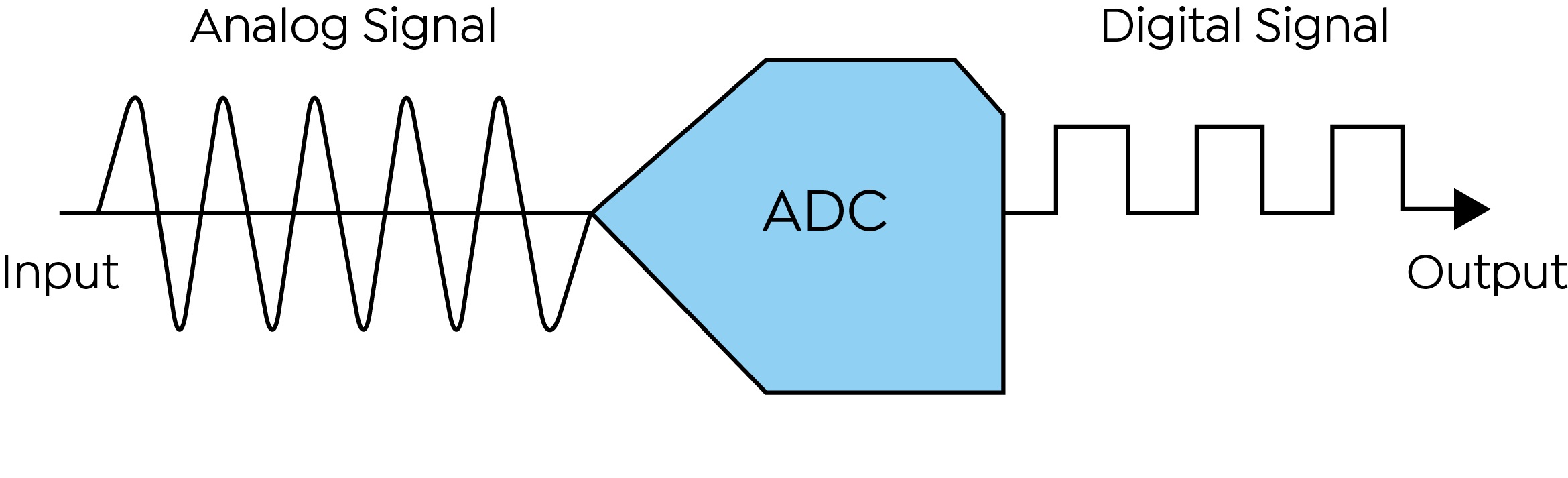
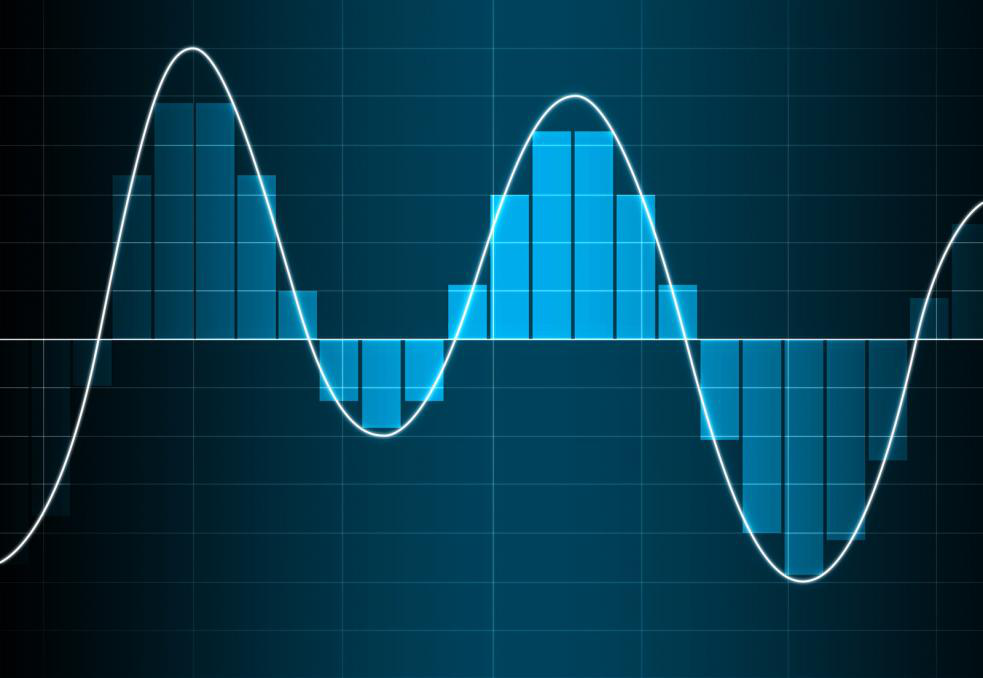
The conversion between analog and digital signals is fundamental to modern communication systems, including cell phones. When you speak into a phone, your voice creates continuous analog sound waves. These waves are captured by a microphone, which converts them into electrical signals. The Analog-to-Digital Converter (ADC) then samples these signals at rapid intervals, measuring their amplitude at each point and assigning them binary values (0s and 1s). This digital data is compressed, transmitted wirelessly, and sent to the receiving device. Upon reaching its destination, a Digital-to-Analog Converter (DAC) reconstructs the original sound wave from the digital data. The phone’s speaker then transforms this electrical signal back into sound waves, allowing the listener to hear the conversation. This seamless back-and-forth conversion between analog and digital enables clear and efficient communication across vast distances.