
The Internet And Who ?
Click Here
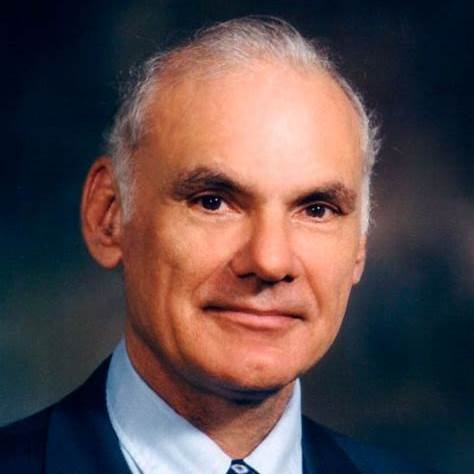
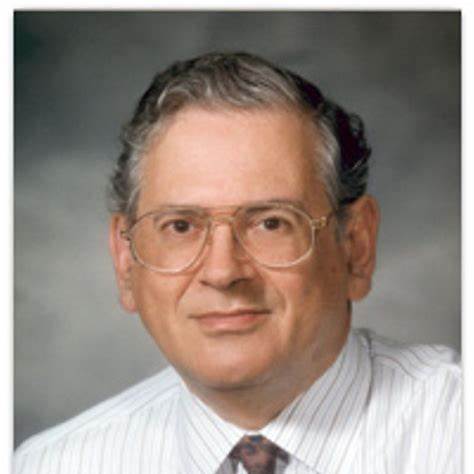
-
Paul Baran (1960s) – A researcher at RAND Corporation who conceptualized packet-switched networks, a foundational idea for the internet.
-
Donald Davies (1965-1966) – A British scientist who independently developed the concept of packet switching, which became crucial for data transmission in networks.
-
ARPANET (1969) – The precursor to the internet, developed by the U.S. Department of Defense’s Advanced Research Projects Agency (ARPA).
- Leonard Kleinrock provided theoretical groundwork with his work on packet switching.
- Larry Roberts led the ARPANET development.
-
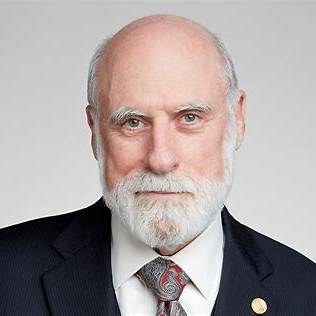
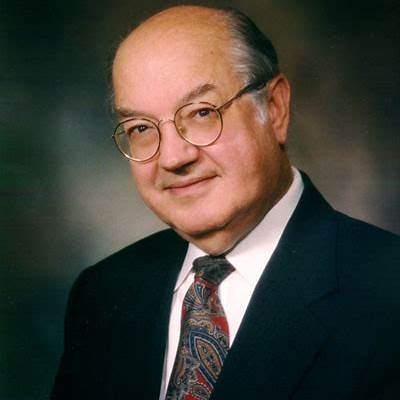
Vinton Cerf & Robert Kahn (1973-1983) – Developed the TCP/IP protocol, which became the foundation of the modern internet.
-
Tim Berners-Lee (1989-1991) – Created the World Wide Web (WWW), which allowed for the development of websites and made the internet user-friendly.


The Creation of the Internet
The creation of the internet was not the work of a single individual but rather a collaborative effort spanning decades, involving multiple scientists, engineers, and institutions. The internet as we know it today is the result of fundamental breakthroughs in communication technology, particularly in packet switching and networking protocols. This document outlines key figures and milestones in the development of the internet.
Early Concepts and Theoretical Foundations
The earliest conceptualization of the internet can be traced back to the 1960s. During this period, Paul Baran, an engineer at RAND Corporation, and Donald Davies, a British scientist, independently developed the concept of packet switching—a method of breaking data into packets for transmission across networks. This approach was crucial in making digital communication reliable, resilient, and efficient. Packet switching allowed information to be divided into smaller units, sent across different paths, and then reassembled at its destination. This innovation laid the foundation for what would later become the internet.
ARPANET: The First Network
In 1969, the Advanced Research Projects Agency Network (ARPANET) was established by the U.S. Department of Defense’s Advanced Research Projects Agency (ARPA). ARPANET was the first network to implement packet switching and served as the precursor to the modern internet. Several key figures contributed to its development:
- Leonard Kleinrock: His research on packet-switched networks provided the theoretical basis for ARPANET.
- Larry Roberts: As the program manager for ARPANET, he was instrumental in its implementation and expansion.
- Robert Kahn and Vinton Cerf: These two computer scientists played a critical role in the creation of the Transmission Control Protocol/Internet Protocol (TCP/IP), which standardized data exchange across networks.
The first message sent over ARPANET occurred on October 29, 1969, between the University of California, Los Angeles (UCLA), and the Stanford Research Institute. The message, intended to be “LOGIN,” only transmitted “LO” before the system crashed. Despite this early hiccup, ARPANET continued to evolve and expand, connecting more universities and research institutions.
TCP/IP: The Internet’s Backbone
By the early 1970s, different computer networks were emerging, but they lacked a standard way to communicate. To address this, Vinton Cerf and Robert Kahn developed TCP/IP, a protocol that enabled diverse networks to interconnect and communicate seamlessly. This protocol became the foundation of the modern internet, replacing ARPANET’s original networking standards. On January 1, 1983, ARPANET officially transitioned to TCP/IP, marking the birth of the internet as a global communication system.
The Birth of the World Wide Web
While TCP/IP provided the infrastructure for network communication, the internet remained primarily a tool for researchers and government agencies until the late 1980s. The World Wide Web (WWW), developed by Tim Berners-Lee in 1989-1991, transformed the internet into a user-friendly platform accessible to the public. Working at CERN (the European Organization for Nuclear Research), Berners-Lee created HTML (HyperText Markup Language), HTTP (HyperText Transfer Protocol), and the first web browser. These innovations enabled the development of websites and made information easily accessible, revolutionizing global communication and commerce.
Conclusion
The internet’s creation was a decades-long effort that required contributions from many visionaries. From packet switching to ARPANET, from TCP/IP to the World Wide Web, each milestone played a critical role in shaping the internet into the interconnected global system we use today. Without the pioneering work of individuals such as Paul Baran, Donald Davies, Leonard Kleinrock, Larry Roberts, Vinton Cerf, Robert Kahn, and Tim Berners-Lee, the digital age would not exist as we know it. The internet continues to evolve, driving innovation and transforming the way we communicate, work, and live.
ChatGPT was used to make some of this website.